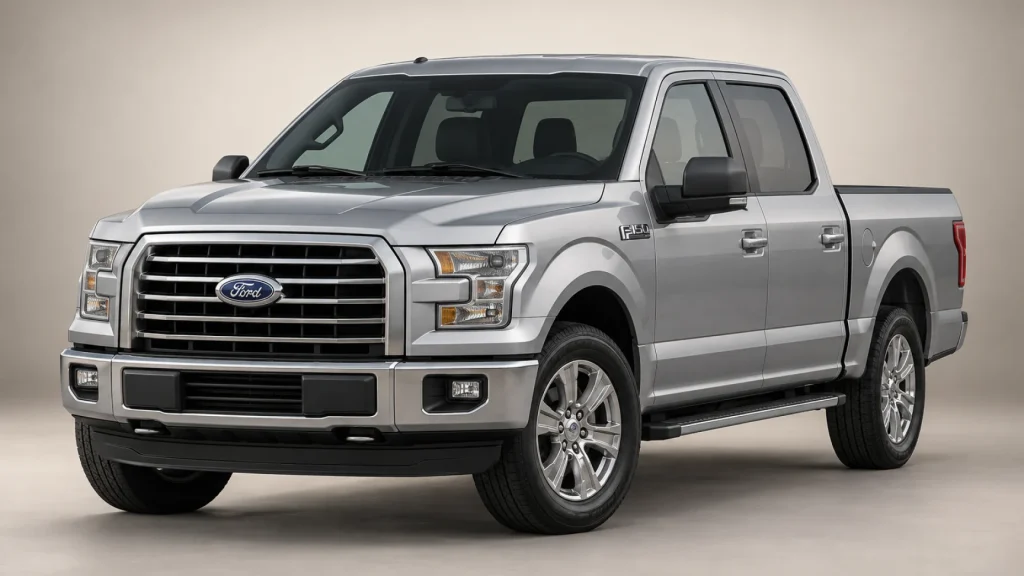
Showing coverage that applies to the Ford F-150 across 2015–2020.
The 2015–2020 F-150 is the thirteenth-generation truck in CarFaultIQ's coverage. The imported records for these model years show a wide configuration spread — 2.7, 3.0, 3.3, 3.5 and 5.0-litre engines in six- and eight-cylinder form, with gasoline, diesel and E85 fuel types recorded. Coverage below is scoped to this year range.
What was offered in these years
- Engine sizes: 2.7L, 3L, 3.3L, 3.5L, 5L
- Cylinder counts: 6, 8
- Powertrain types: diesel, gasoline
- Fuel types: diesel, ethanol (e85), gasoline, regular gasoline
Displacements and powertrain types come from the imported vehicle records for these model years. A specific engine code cannot be established from displacement alone, so no engine-specific claim is made here.
Documented problems for these years
Five documented pages reach these years, and most of them straddle the window rather than sitting inside it. Body panel corrosion is the only record matching 2015–2020 exactly. The brake master cylinder record covers 2013–2018 and the intercooler condensation misfire record covers 2011–2016, so both begin before this generation. The 10-speed harsh shifting record starts at 2017, and the EcoBoost cam phaser rattle record covers 2017–2021, continuing past the end of this window. Because the configuration spread is unusually wide here, several of these records relate to particular engine or drivetrain combinations rather than to every truck in the range.
- Ford F-150 Brake Master Cylinder Concern 2013–2018
- Ford F-150 Intercooler Condensation Misfire 2011–2016
- Ford F-150 Body Panel Corrosion Reports 2015–2020
- Ford F-150 10-Speed Harsh Shifting 2017–2020
- Ford F-150: EcoBoost Cam Phaser Rattle (2017–2021) 2017–2021
Recall campaigns covering these years
Eight campaigns reach this window across six systems: equipment labelling, windshield wipers, exterior lighting, reversing detection, the electrical system and the power train. None applies across the whole 2015–2020 range. Two headlight campaigns and a labelling campaign cover 2018–2020; the remainder are narrower still, with four campaigns limited to the 2020 model year alone. On this generation a year match is a weak signal and the VIN check is the one that counts.
- 24V852000 — EQUIPMENT:OTHER:LABELS applies to 2018–2020 within this 2015–2020 window
- 22V250000 — VISIBILITY:WINDSHIELD WIPER/WASHER:LINKAGES applies to 2020 within this 2015–2020 window
- 26V373000 — EXTERIOR LIGHTING:HEADLIGHTS applies to 2018–2020 within this 2015–2020 window
- 25V442000 — BACK OVER PREVENTION:SOFTWARE applies to 2019–2020 within this 2015–2020 window
- 20V575000 — BACK OVER PREVENTION: SENSING SYSTEM: CAMERA applies to 2020 within this 2015–2020 window
- 20V467000 — ELECTRICAL SYSTEM:STARTER ASSEMBLY applies to 2020 within this 2015–2020 window
- 20V197000 — POWER TRAIN:AUTOMATIC TRANSMISSION:GEAR POSITION INDICATION (PRNDL) applies to 2020 within this 2015–2020 window
- 20V097000 — EXTERIOR LIGHTING:HEADLIGHTS applies to 2018–2020 within this 2015–2020 window
A model and year match does not prove a specific vehicle is affected. Check the VIN against the official recall database. Check a VIN at NHTSA
Buying and inspection guidance
- Best & Worst Ford F-150 Years model-wide
- Ford F-150 Common Problems model-wide
- Ford F-150 Recall and Complaint Evidence model-wide
- Used Ford F-150 Buying and Inspection Guide model-wide